Showing posts with label animals. Show all posts

Tuesday, 28 May 2019

In Defense of the Wasp


wasp-2300988_1920
I've decided to do a post about a much maligned insect. The Wasp.

We all know the nuisance black and yellow striped creature that buzzes round us when we want to eat outside, and I've heard it said, 'What is the purpose of wasps?'

Well, here it is. Something that I hope will help to mollify your thoughts on the creatures.

I was brought to thinking of them last September when I got stung. In all fairness, it wasn't the wasp's fault. Well, not entirely, anyway. I saw one in my daughter's bathroom and decided to let it out of the window. I failed to get it out, and it must have ended up on my clothes, just under my arm, so when I put my arm down, it stung in self defense. Still, it didn't half hurt, and continued to do so for days!
What we think of as wasps (and hornets), those black and yellow terrors of picnics, are not the only insects to be classified as wasps. Wasps belong to the order of insects called Hymenoptera and there are over a hundred thousand species.

The black and yellow terrors are communal insects. They build nests of a papery substance created from wood. It usually begins in the spring when a queen lays eggs that hatch into workers. The workers are all female, and their ovipositors are what have become their stings.

Each spring, a new queen that has hibernated over winter, begins to build a new nest, built of wood she has chewed up and mixed with saliva. Then she lays a few eggs. She has to forage herself for food for the hatched grubs until they become adult worker wasps.
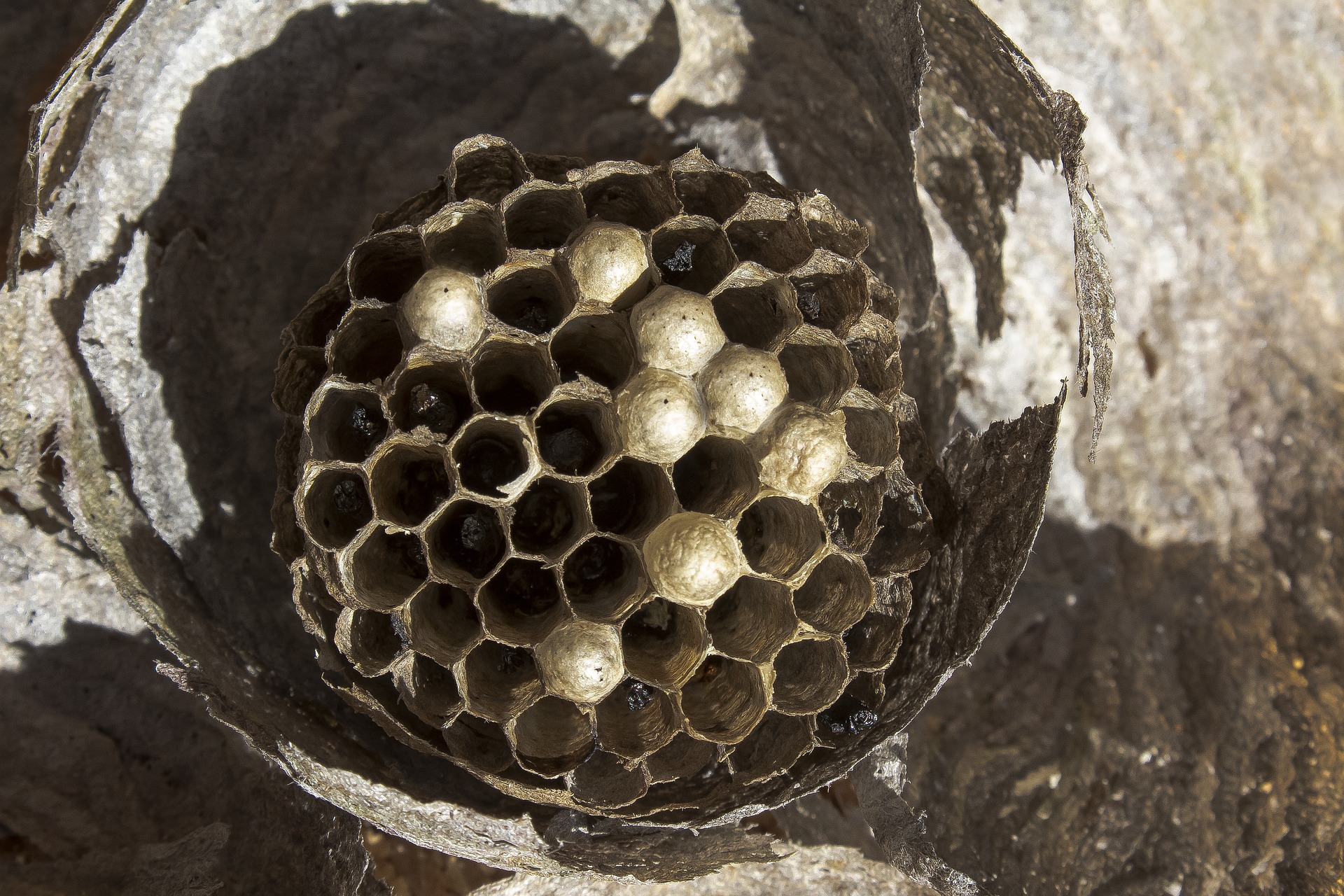


the-hive-3724761_1920
These wasps only become a real nuisance in the late summer when the queen has stopped laying and not more workers are being produced. They search for food—sweet, sugary substances usually—and that is when they come into contact with humans. And we don’t like it. Most of the rest of the year, they are happily capturing insects and feeding on nectar from flowers. They are important pollinators. Not something most people consider, but with the problems with the bee population recently, perhaps we should consider them more kindly.
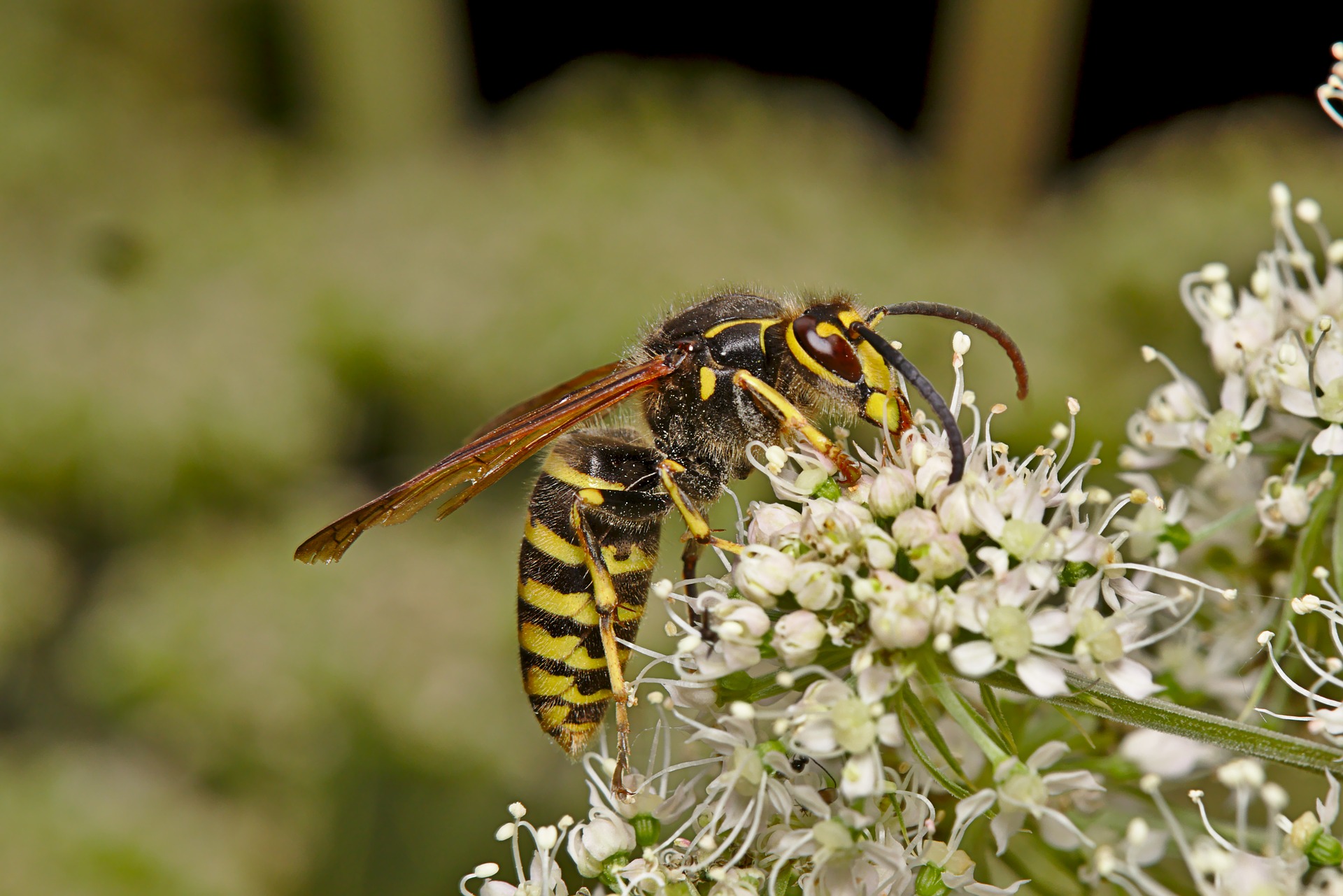
wasp-3603869_1920
Most wasps are not social, though, and live a solitary life. Some live in communities, with nests close to each other, but do not interact, except to sometimes steal each others’ prey. Some species actually build communal nests, but each adult wasp has her own cell, and there is no division of labour or community work. The females each catch and feed their own grubs.

The prey of these wasps is spiders and insects. They feed them to the grubs, which are carnivorous, but the adults usually feed on nectar. As such, they are useful to help get rid of unwanted insect pests.
Then there are the parasitic wasps. They lay their eggs in the body of the prey animal. The grubs then eat their way through the insides of the poor creature. Others lay their eggs in the tissue of plants. The plant responds by creating a gall around the growing grub.
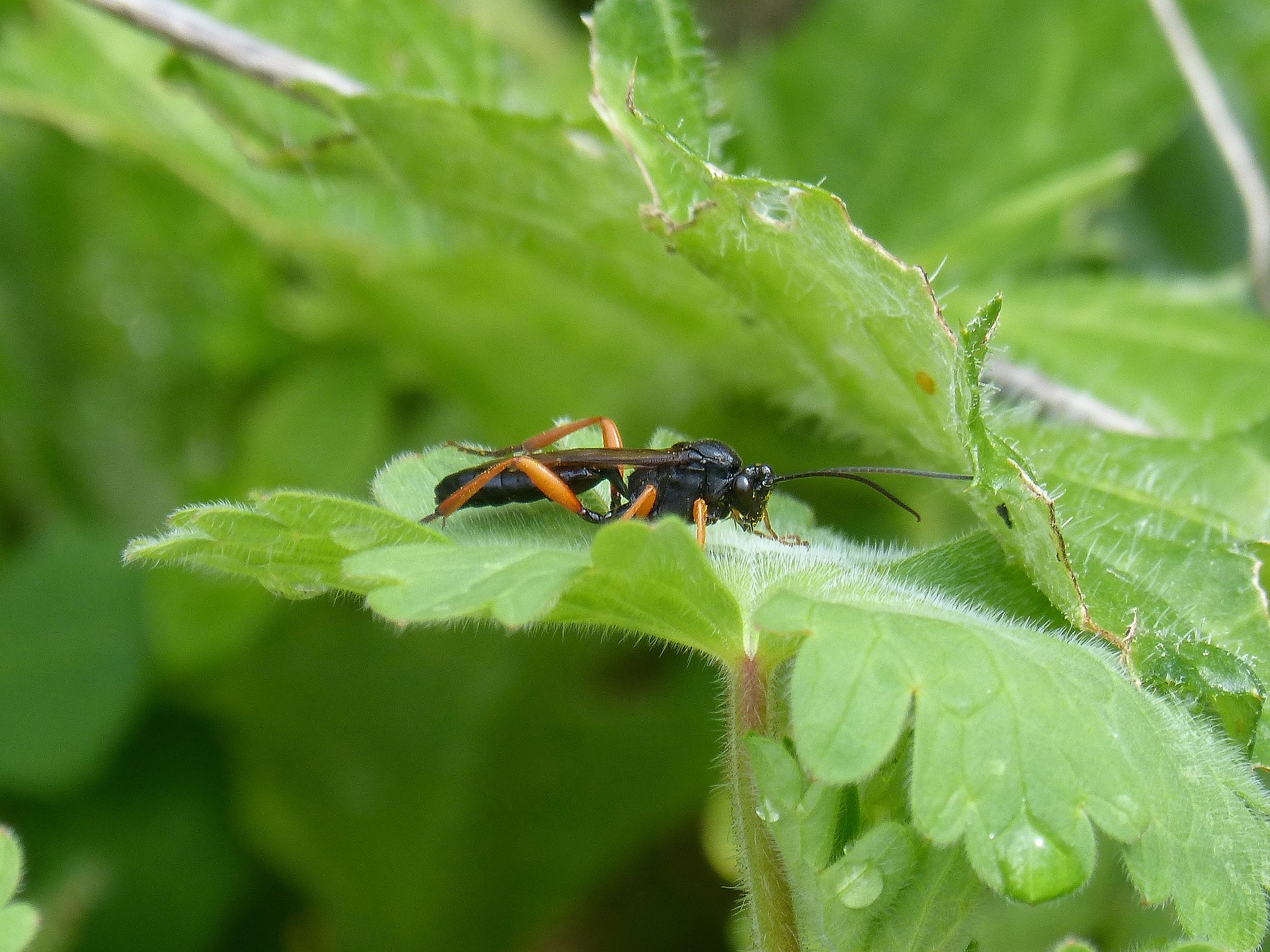
ichneumonoidea-2181464_1920

I admit I’m not the most generous of people to wasps. It'’ mow spring, and the queens are coming out to find a place to build their nests. Just this morning, while I was working at my computer, I heard a buzzing by the open window. It disappeared, but returned soon after. This happened several times and so I got up to investigate. A wasp was clearly inspecting the brickwork around my window. It then had the temerity to enter and start to look around my husband’s computer.

I went downstairs and got the Wasp and Fly killer and zapped it as it went back to the window. (I didn’t want to spray the killer onto my husband’s computer, just in case! I’ve no idea what it might do to it.) I might know they are important predators and pollinators, but I don’t want hundreds of them just outside the room where I work.

So please spare a thought for the poor wasp. They aren't as useless as you thought.

Please add a comment to the comments box to tell me what you think of these insects.
 

Tuesday, 29 May 2018

Can Animals Talk?


What made me think of this was something I was reading in a book called 'Proust and the Squid' about how we learn to read. It told of monkeys that, when danger was spotted, used a particular call for a leopard and a different one for an eagle, the two main predators. They had also combined the two to mean 'get out of here fast.'
If the sounds are made exclusively for those things, and as I read it, they are, then are they not 'words'?
wolf1

What is talking?
Talking is using words in order to express a meaning.

What is a word?
A word is a sound, or combination of sounds assigned to a particular thing.


Having set that out I will state that in my opinion, animals can and do talk. Just because they do not talk in such a complicated way as we do does not mean they are not talking.

Take birds, for example. Birds sing. Some birds have songs that are beautifully melodic and musical. The British robin for example. He isn't just singing because at long last winter is over and it's a nice sunny day, so he feels happy. No, he's saying to all other male robins 'I'm here and this is my patch, so stay away.'


At the same time, he's advertising to all female robins that he is a good catch. Songbirds emit up to 20 different sounds that tell of fear, hunger or alarm and warnings to fledgelings. (The Free Dictionary.com)

OK, so perhaps that is communicating and not talking. After all, we communicate an awful lot without saying a word, so let's look a little deeper.

Anyone who has a cat or a dog can usually catch on pretty quickly what their various sounds mean. One meow for 'I'm hungry', and a different one for 'Let me out, I need a pee.' If your cat always makes the same sound for the same thing, is that not what a word is?

I have no idea what all the sounds made by Herring gulls mean, but they have such a wide variety that I would like to find out if they use them for particular things. I do know that young herring gulls make a little squeaking noise to beg for food from their parents. Is this a 'word' meaning 'food' or 'I'm hungry'? It's not used at any other time as far as I am aware.

An article in 'Dr Goodword's Office' on 'Can Chimpanzees Speak' (Alphadictionary.com) decides they cannot. It states that chimpanzees that learned to sign cannot form complex sentences. they would say 'Give John Banana' or, 'Car hit man.' The writer states that these are not truly speech because there are no morphemes (-ing, -ed, at, I, she etc). I hesitate to disagree with the writer, but I am going to anyway. The chimpanzee is communicating its desires or information using, in this case, signs and not sounds, but I would say it's talking. Anyway, if using signs isn't talking, I think a lot of deaf people will be very upset.

Just because an animal can't make the same sounds that we do, does that mean it can't talk? That would be like saying the French can't talk because they don't use the same sounds that we do for specific things. ('chien' for 'dog', 'livre' for 'book'.)

OK, I'll admit that animals can't hold conversations in the way we understand them, nor express complex ideas, but they do talk to each other using 'words' and we are being rather superior in thinking they can't talk. Dr Goodword's Office seems to have the definition of speech as a rather complex achievement, involving sentence structure and all parts of speech.

Your cat 'tells' you what she wants by her meow. The pygmy sloth 'tells' all around he's feeling randy by a particular call. (I heard that one on the Radio 4 the other day.) The young herring gull 'tells' its parent it wants food by squeaking. If these sounds are used specifically for that particular thing, then it fits the definition I made above of what a word is.

I think it all depends on your definition of talking, and there may be a difference in speech and talk. Perhaps animals can talk, but what they say is not speech.

My conclusion? Animals can talk (but your cat will never make a speech).